


OpenAI officially introduced the Parental Controls feature in ChatGPT on Monday (9/29/2025). This feature is designed to provide tools for parents to monitor and regulate their teenagers’ use of the AI chatbot.
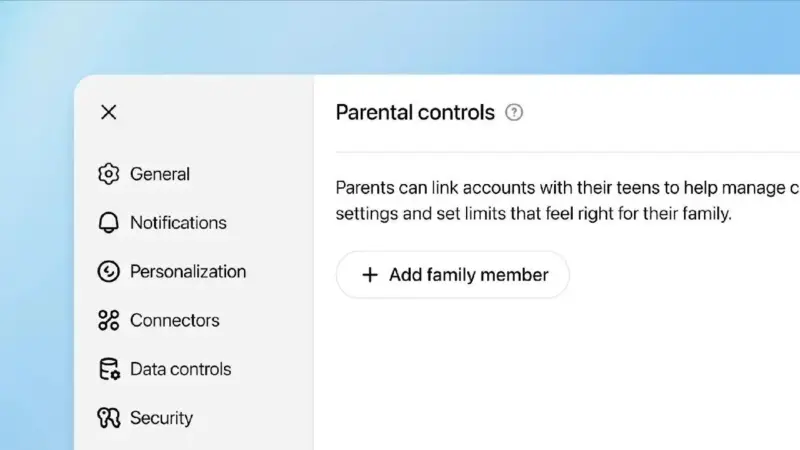
Through the Parental Controls feature, parents can link their ChatGPT accounts to their teenagers’ accounts. This gives them direct access to control usage. This feature is flexible and optional, allowing families to adjust settings as needed.
Flexible Control and Privacy Protection
Once the account is linked, parents can make several important settings, including:
- Setting Quiet Hours: Determining when teens can or cannot access ChatGPT.
- Disabling Certain Features: Turning off several chatbot functions that could potentially be misused, such as voice mode, memory, and image creation (create image).
- Data Settings: Parents have the option to determine whether their teenager’s conversation data can be used by OpenAI to train the ChatGPT model or not. This ensures that privacy and data control remain in the hands of the family.
Additional Risk and Security Notification System
The Parental Control feature in ChatGPT not only functions as an access regulator, but also adds a layered protection system. This is especially true for harmful content and psychological risks:
- Serious Risk Detection: ChatGPT now claims to be able to recognize signs in conversations that point to dangerous actions, such as self-harm or suicide.
- Parent Notification: If AI detects indications that a teenager is under severe stress, a team of human reviewers will assess the situation. If necessary, parents will receive notifications via email, SMS, or the app. OpenAI emphasizes that this system is not perfect and that communication between parents and children remains key.
- Emergency Procedures: OpenAI has also prepared procedures for involving emergency services in extreme situations. For example, when AI detects a serious threat to a child’s life and the parents cannot be contacted.
- Content Restrictions: Teen accounts will receive additional protection by limiting exposure to graphic content, sexual roleplay, violence, dangerous viral challenges, and the idealization of extreme beauty.
Background of the Launch Amid Public Attention
The launch of the Parental Control feature comes amid growing public scrutiny and regulation of AI use by teenagers. Cases such as the alleged suicide of teenager Adam Raine, whose parents accused ChatGPT of validating their son’s dangerous thoughts, have sparked widespread concerns about the safety of chatbots.
A survey by Common Sense Media even found that 72 percent of teenagers in the United States use AI as AI companions (chat friends).
This has prompted regulators, such as the US Federal Trade Commission (FTC), to open investigations and ask major technology companies, including OpenAI, Meta, and xAI, to explain their methods for monitoring the negative impact of AI on children and adolescents.
In this situation, the inclusion of the Parental Control feature in ChatGPT is an important strategic move by OpenAI. This is to prioritize the safety of teenagers and restore public trust in its services.
Although technology is only part of the solution, OpenAI still urges parents to actively communicate, set family rules, and accompany their children in their daily interactions with AI.


